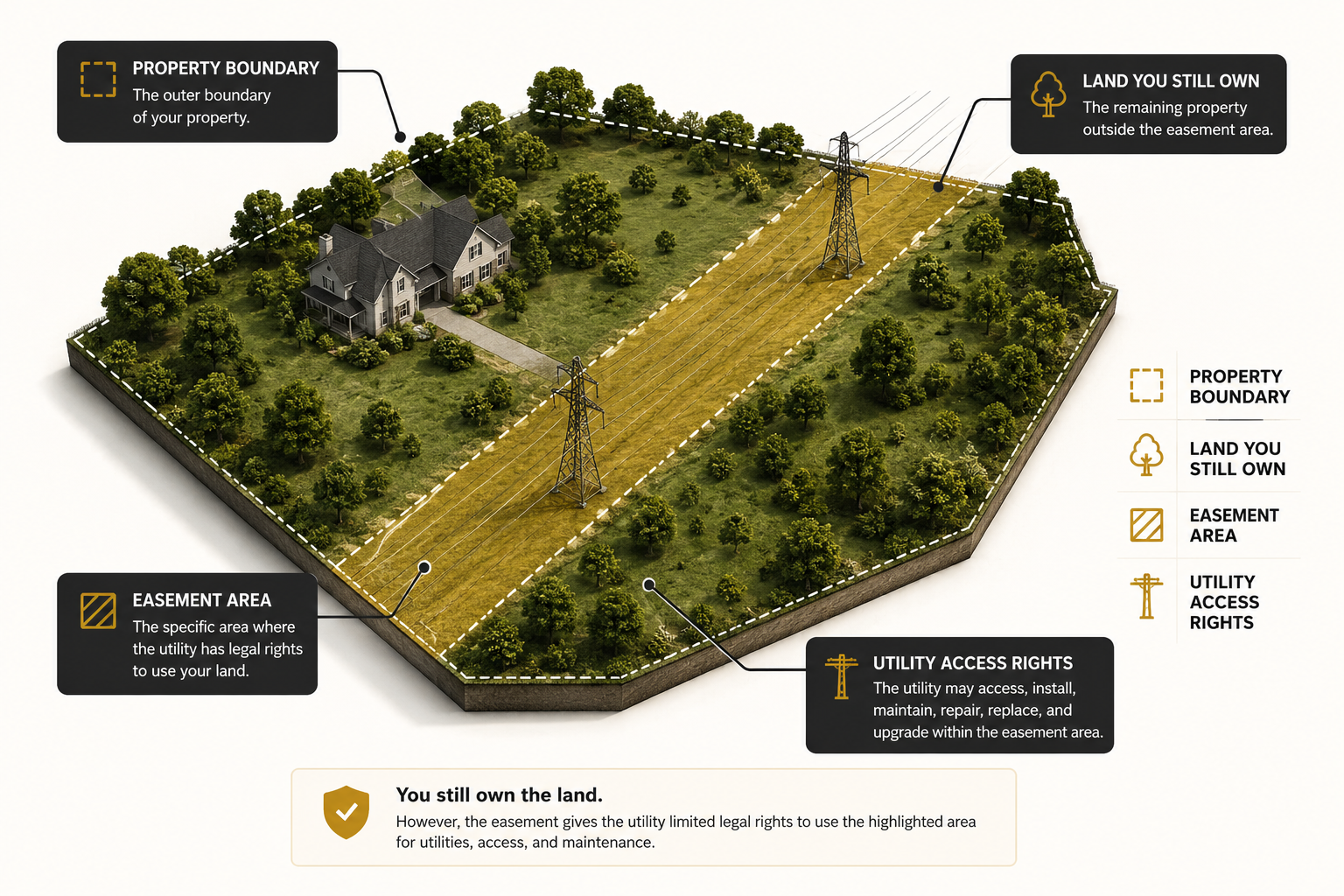
When the government or a utility company seeks the right to use part of your property, the easement can affect access, building limits, future development, and property value. Before you sign or accept an offer, have the easement terms reviewed.
A utility easement gives the government or a utility company the legal right to use a portion of your property for specific purposes, such as installing and maintaining power lines, pipelines, drainage facilities, access routes, or other infrastructure.
You may still own the property, but the easement can limit how that area is used, built on, landscaped, accessed, or developed. The scope of those limitations depends on the language of the easement and how it affects the property.
You may still own the land, but the easement can reduce control over how that portion of the property is used.
UTILITY INFRASTRUCTURE
Common Types of Utility Easements
Utility easements can involve different types of infrastructure. The impact on your property depends on what is being installed, where the easement is located, how wide the easement is, and what rights the utility company is asking for.
Electric Power Easements
These may involve power lines, poles, towers, transformers, underground electric lines, access routes, and vegetation-clearing rights.
Pipeline Easements
Pipeline easements may involve natural gas lines, petroleum lines, utility corridors, inspection rights, repair rights, and limits on digging or building.
Water and Sewer Easements
These easements may involve underground water lines, sewer lines, lift stations, manholes, drainage structures, and maintenance access.
Drainage and Stormwater Easements
Drainage easements may affect grading, detention areas, stormwater flow, pipes, ditches, culverts, and what can be built or planted nearby.
Telecommunication and Fiber Easements
These may involve fiber lines, communication cables, utility boxes, towers, underground conduit, equipment pads, and service access.
Access and Maintenance Easements
Some utility easements give the company the right to enter the property for inspection, repairs, replacement, upgrades, or emergency work.
UTILITY COMPANY RIGHTS
What Rights a Utility Easement May Give the Utility Company
A utility easement is not just a line on a map. The easement document may give the utility company specific rights to enter, build, maintain, repair, clear, replace, or upgrade facilities on part of your property.
The exact language matters. Small wording changes can affect how much control the utility company has over the easement area.
Install Utility Facilities
The easement may allow poles, towers, wires, pipes, meters, boxes, transformers, manholes, valves, or other utility equipment to be placed on the property.
Access the Easement Area
The utility may ask for the right to enter the easement area for inspection, service, emergency work, maintenance, or repairs.
Maintain, Repair, or Replace
Utility easement language may allow the company to maintain existing facilities, repair damage, replace equipment, or return later for future work.
Clear Trees and Vegetation
The utility may seek the right to cut, trim, remove, or restrict trees, shrubs, landscaping, crops, or vegetation near utility facilities.
Restrict Building or Digging
The easement may limit structures, fences, pools, grading, excavation, septic systems, tree planting, or other improvements within the easement area.
Upgrade or Add Facilities
Some easement documents allow future upgrades, replacements, added lines, larger facilities, relocation, or expanded utility use.
PROPERTY VALUE IMPACT
How Utility Easements Can Affect Property Value
Utility easements can affect more than the strip of land being used. They may limit how the property can be developed, maintained, landscaped, accessed, or sold in the future.
Easement Area
+
Use Restrictions
+
Remainder Impact
+
Marketability
=
Total Property Impact
Loss of Usable Land
The easement may limit where structures, fences, driveways, landscaping, or other improvements can be placed.
Building and Development Limits
Future construction, subdivision, grading, excavation, or expansion plans may be restricted by the easement terms.
Visual Impact
Poles, towers, boxes, meters, pipelines, access roads, or cleared corridors may affect the appearance and marketability of the property.
Access and Maintenance Entry
The utility may have the right to enter the property for inspections, repairs, replacement, upgrades, or emergency work.
Tree and Landscaping Restrictions
Trees, crops, shrubs, grading, and landscaping may be limited or removed to keep utility facilities accessible and safe.
Buyer Concerns and Marketability
Future buyers may view the property differently because of visible utilities, access rights, safety concerns, or reduced flexibility.
BEFORE YOU SIGN
Utility Easement Terms That Should Be Reviewed
The language in a utility easement can affect how much land is used, what the utility company may do, and how the remaining property is impacted. Before signing or accepting compensation, the document should be reviewed carefully.
The easement language matters.
A utility easement can give long-term rights that affect more than the marked easement area. The document may control where the utility can enter, what it can install, what you can build, what vegetation can be removed, and whether the property must be restored after work is completed.
Do not review only the payment amount. Review the rights being granted.