
When the government or a utility needs limited use of your property, you still have rights. We help Georgia property owners understand easements, evaluate offers, and pursue the compensation they deserve
An easement gives another party limited rights to use part of your property for a specific purpose. These rights may involve utilities, drainage, road access, construction work, or future maintenance. You may still own the land, but the easement can affect how the property is used, accessed, or developed.
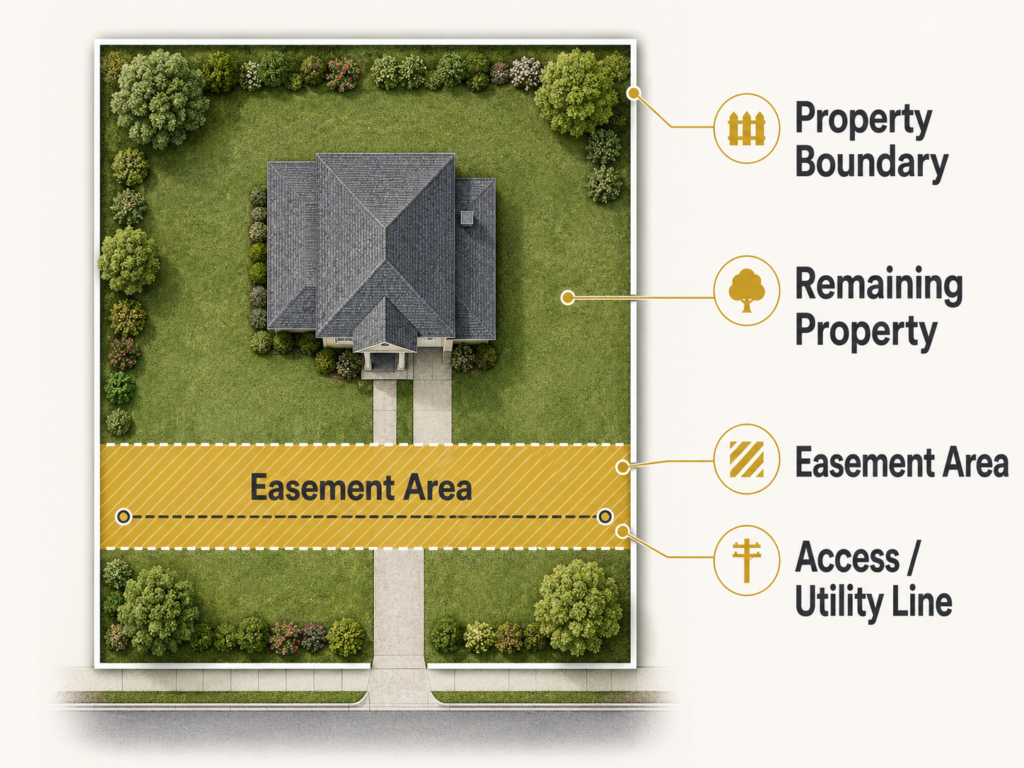
If you received an easement notice, a government agency or utility company is asking for the right to use a portion of your land — for a pipeline, power line, drainage ditch, road widening, or similar project. You keep ownership of the land, but the easement gives them specific rights to enter, use, and sometimes permanently restrict what you can do with that area.
That matters more than it might seem. An easement can affect how you build, fence, landscape, or develop your property — sometimes for decades. And the compensation offered in the first notice may not reflect everything the easement will actually cost you.
A permanent easement usually gives another party long-term rights to use part of your property.
A temporary easement usually allows limited use of part of your property during a project.
An easement can affect more than the strip of land shown in the notice. It may change how the property is used, accessed, maintained, restored, or developed.
An easement may restrict building, fencing, landscaping, parking, or other improvements.
The easement may allow others to enter the property for installation, maintenance, inspection, or repairs.
Crews may grade, trench, and store equipment on the easement area, and restoration afterward is often incomplete.
An easement may reduce usable area, limit future development, or affect marketability.
Where lines, poles, pipes, meters, or equipment may be placed, and whether crews can access the area later.
How stormwater, grading, pipes, ditches, or runoff may affect the property and surrounding improvements.
Whether the easement affects driveways, entry points, frontage, traffic flow, or use of the remaining property.
How long contractors may use the property, what work is allowed, and what must be restored afterward.
Whether someone can return later for inspection, repair, replacement, or maintenance of slopes and utilities.
Read the easement terms, plans, and legal description to see exactly which rights are being taken.
Consider building limits, access, landscaping, drainage, and how the strip affects the rest of the land.
Check whether the payment reflects the permanent restriction, not just the square footage covered.
Have the easement terms, plans, appraisal, and offer reviewed before you sign anything.